Kanjivaram vs Banarasi Saree: Which Should You Choose? A Complete Comparison
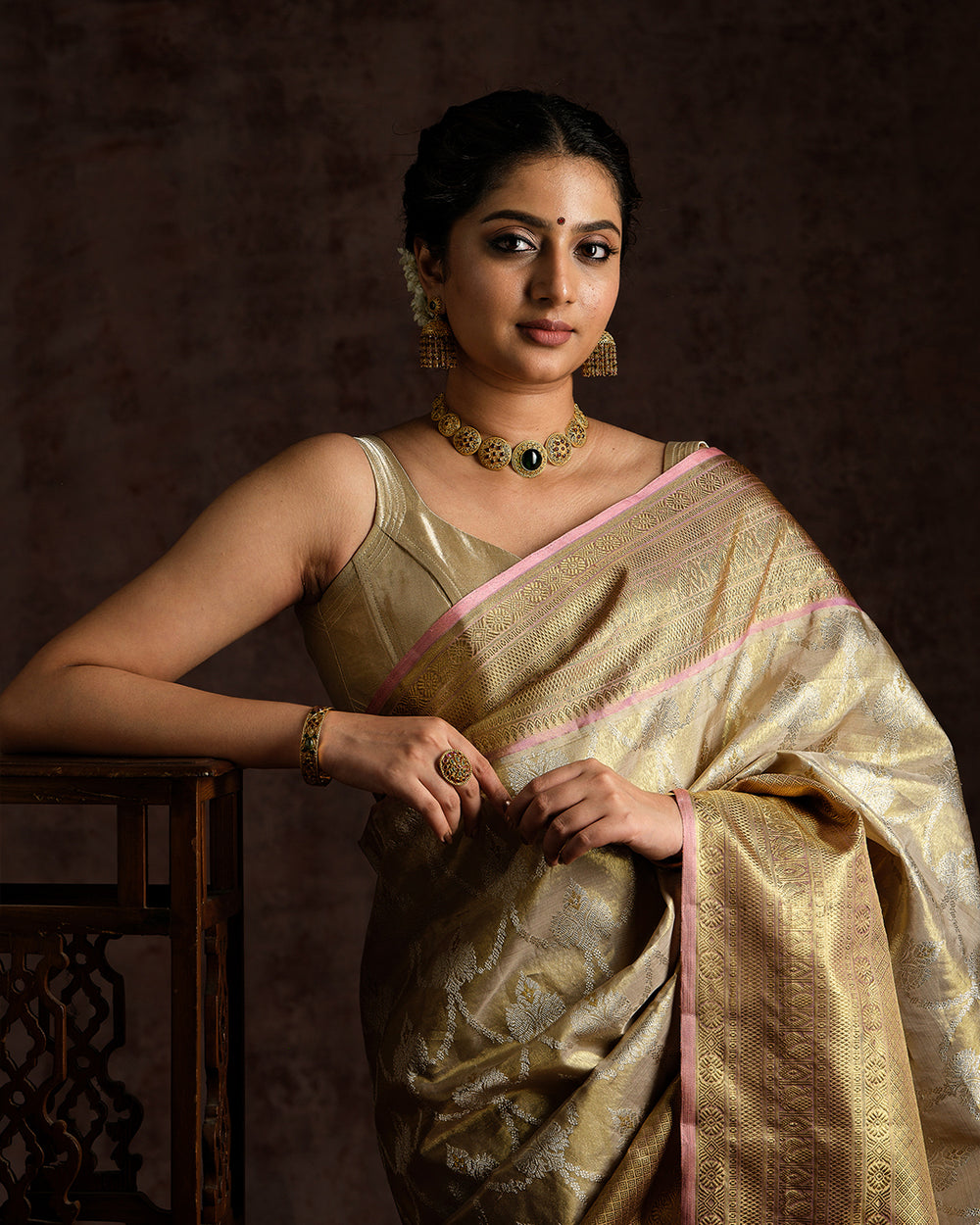
Kanjivaram and Banarasi are India's two most iconic silk saree traditions — but they differ significantly in weaving technique, drape, motifs, and the occasions they suit best. This guide compares them across every dimension to help you decide which is right for your wedding, celebration, or collection. At The Saffron House, we carry extensive collections of both, sourced directly from weavers in Kanchipuram and Varanasi.
By Meera, Founder & CEO of The Saffron House
Origin and Heritage
Kanjivaram sarees originate from Kanchipuram, Tamil Nadu, a temple town with a weaving tradition stretching back over 400 years, closely tied to South Indian temple culture and Dravidian aesthetic sensibilities. The weavers are predominantly from the Devanga and Saligar communities.
Banarasi sarees come from Varanasi (Banaras), Uttar Pradesh ,one of the world's oldest living cities, with a silk weaving tradition dating back over 500 years, deeply influenced by Mughal patronage. The weavers are primarily from the Ansari community, and the craft carries strong Persian and Mughal design influences.
Silk and Fabric
Kanjivaram: Uses thick, tightly twisted pure mulberry silk that gives the saree a firm body and structured drape. The silk is heavier and stiffer, creating sharp pleats that hold their shape. A typical Kanjivaram weighs 700g to 1.2kg.
Banarasi: Uses finer silk threads, often Katan (pure twisted silk), that create a softer, more fluid drape. Banarasi sarees are generally lighter than Kanjivarams, typically weighing 500g to 900g, and feel more supple against the body.
The quick test: A Kanjivaram stands slightly on its own when you hold it up, it has body. A Banarasi flows and falls when you hold it. IT has drape.
Weaving Technique
Kanjivaram: Uses a distinctive three-shuttle technique where the body, border, and pallu are woven on separate sets of threads. In the prized korvai technique, the border is interlocked with the body during weaving creating an inseparable, extremely durable join. This is why Kanjivarams are famous for their contrasting borders the border can be a completely different colour from the body.
Banarasi: Uses jacquard looms (still hand-operated) with intricate punch-card patterns that control the design. The brocade technique weaves supplementary zari or silk threads into the fabric to create the ornate surface patterns. The body, border, and pallu are woven as one continuous piece.
Zari and Design
Kanjivaram motifs are rooted in South Indian temple art and nature peacocks, temple towers, mangoes, lotuses, mythical yali creatures, rudraksha beads, and geometric checks and stripes. The zari work is typically concentrated in the border and pallu, with the body featuring either a solid colour or small repeating butas.
Banarasi motifs carry strong Mughal and Persian influences jangla (dense vine patterns), butidar (small repeating floral motifs), tanchoi (tone-on-tone brocade), meenakari (coloured thread highlights in zari), and the distinctive jaal (net-like all-over pattern). Banarasi zari work often covers the entire surface of the saree, creating a more uniformly ornate look.
In simple terms: Kanjivarams are bold contrasts vivid body with dramatic borders. Banarasis are all-over richness intricate patterns covering the entire surface.
Price Comparison
Both weaves span a wide price range depending on silk quality, zari type, and design complexity. Here is a general comparison for 2025:
| Category | Kanjivaram | Banarasi |
| Entry-level handwoven | ₹15,000 – ₹25,000 | ₹10,000 – ₹20,000 |
| Mid-range (popular) | ₹25,000 – ₹50,000 | ₹20,000 – ₹45,000 |
| Premium / Bridal | ₹50,000 – ₹1,00,000 | ₹45,000 – ₹80,000 |
| Collector's / Heirloom | ₹1,00,000+ | ₹80,000+ |
Which Occasions Suit Each?
Choose Kanjivaram for: South Indian weddings (especially muhurtham), temple ceremonies, Pongal, Onam, Navarathri, formal family celebrations, and any occasion where you want a structured, grand silhouette. Kanjivarams are also the traditional saree gifted by the bride's family in Tamil and Telugu wedding customs.
Choose Banarasi for: North Indian weddings (especially the reception and sangeet), Durga Puja, Diwali, Karva Chauth, engagement ceremonies, and occasions where you want a softer, more flowing drape with all-over richness. Banarasi sarees are the quintessential bridal saree in Bengali, Marwari, and many North Indian communities.
Can You Wear Both? Absolutely.
The "Kanjivaram or Banarasi" question often comes up for brides and trousseau planning. Our honest advice: if your budget allows, include both. A Kanjivaram for the ceremony and a Banarasi for the reception gives you the best of both traditions. Many of our customers — especially those in the Indian diaspora planning weddings in the US build trousseaux that include both weaves, along with a Paithani and a Patola for different functions.
At The Saffron House, we carry over 150 Kanjivarams and a curated selection of Banarasi silks. Our team specialises in trousseau curation — book a video appointment and we will help you plan sarees for every function.
Shop Both at The Saffron House
Handwoven Kanjivarams from Kanchipuram. Handwoven Banarasis from Varanasi. All authentic, all sourced directly from master weavers.
