

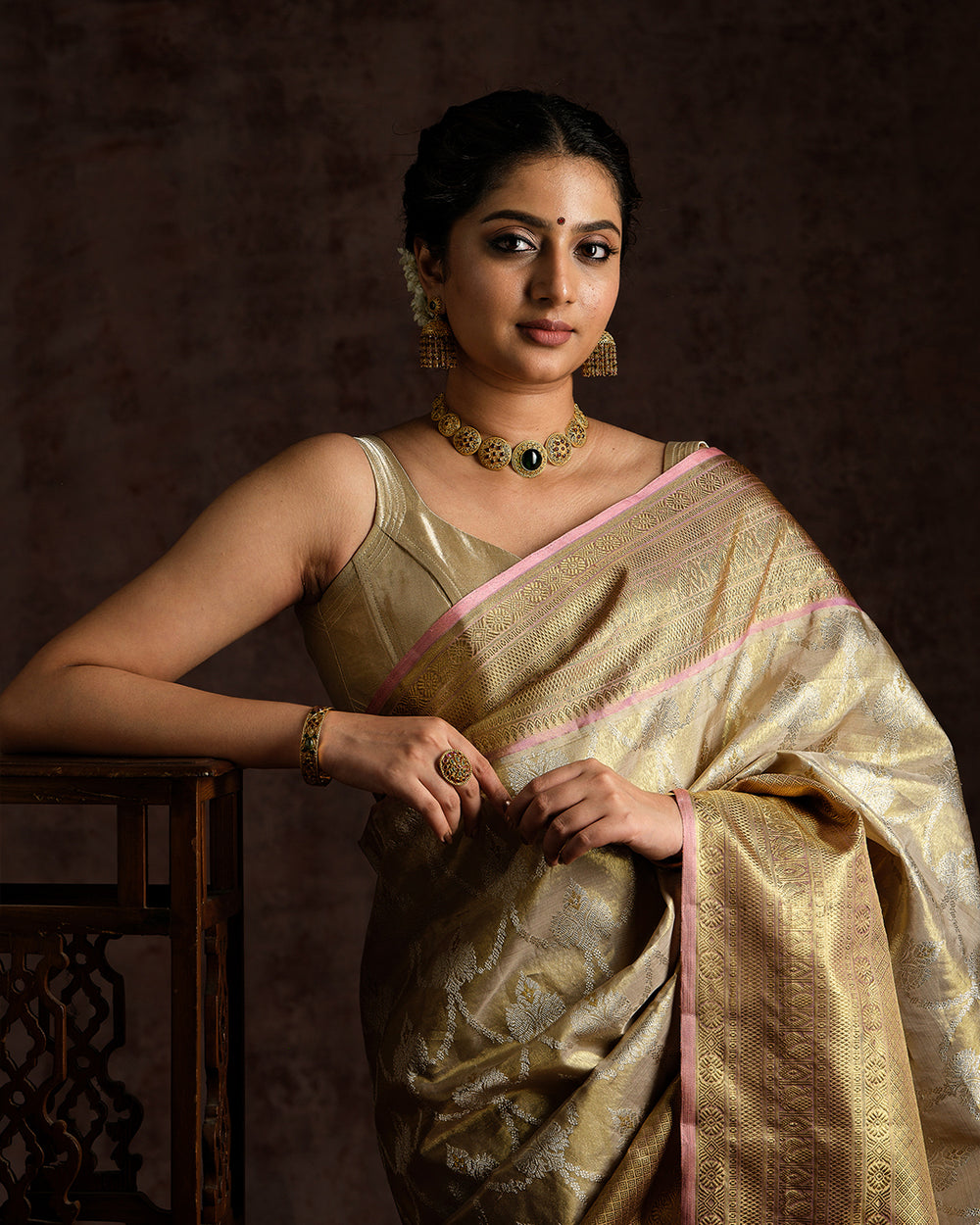
The Silk Hour — Bridal Edit '26: A Designer's Journal Through Architecture, Ornamentation and Silk

INTRODUCTION
“Every collection begins with observation.”
A saree is more than six yards of silk. It is a piece of memory, tradition, craftsmanship, and celebration woven together. It carries stories across generations, becoming a part of weddings, family heirlooms, and moments that are remembered for a lifetime. Every border, motif, weave, and handcrafted detail reflects the skill of artisans whose craft has been preserved and passed down over centuries. With Bridal Edit '26, our vision was to celebrate this timeless beauty while exploring a new design language for the contemporary bride. The collection brings together heritage, craftsmanship, and modern elegance, creating sarees that feel rooted in tradition while embracing a fresh and refined perspective.
As designers, inspiration often appears in unexpected places. During visits to palaces, temples, and historic monuments, it was rarely the scale of the buildings that stayed with us. Instead, it was the smaller details that quietly demanded attention. A beautifully carved arch, an intricate jaali, a floral relief hidden within stone, or the rhythm of a decorative border often felt as carefully composed as the borders and motifs of a saree.
Over time, these observations naturally began to influence the design process. The repetition of architectural patterns echoed woven layouts, carved floral forms translated into embroidery, and ornamental borders found new expression through silk. Rather than recreating these elements directly, they were thoughtfully interpreted into motifs, borders, surface embellishments, and silhouettes that felt refined, timeless, and relevant for today's bride.
At the heart of the collection is the Kanjivaram saree, chosen for its rich weaving heritage, enduring elegance, and ability to carry intricate craftsmanship with remarkable grace. Paired with embroidered veils, structured corsets, statement blouses, and handcrafted details, each look was designed to honour tradition while introducing a contemporary bridal identity. More than a collection of bridal wear, Bridal Edit '26 reflects The Saffron House's belief that great design is created through observation, curiosity, and craftsmanship. It is a celebration of the details that surround us every day, transformed into heirloom pieces that preserve tradition while creating new stories for generations to come.
"Some stories are carved in stone. Others are woven in silk."
FINDING INSPIRATION
Discovering beauty in India's monuments, palaces, and historic details.

Chowmahalla Palace, Hyderabad
The visual language of Bridal Edit '26 draws inspiration from some of India's most remarkable architectural details, where craftsmanship, ornamentation, and artistry come together to create spaces of timeless beauty.
Among the primary references was Chowmahalla Palace in Hyderabad. The palace's ornate arches, intricate jaalis, decorative frames, and floral embellishments became a significant source of inspiration throughout the collection. Influenced by Mughal architecture, these details possess a sense of grandeur while maintaining elegance and delicacy. The graceful curves of the arches, the layered ornamentation, and the intricate patterns found within the palace offered a rich visual vocabulary that translated beautifully into motifs, borders, and embroidered details.
Another important influence was the Lotus Mahal in Hampi. Unlike the elaborate ornamentation of palace architecture, the Lotus Mahal is admired for its balance, symmetry, and graceful silhouette. Its distinctive arches and harmonious proportions introduced a softer and more refined architectural language to the collection. The monument's effortless elegance became an important reference while exploring layouts, compositions, and the overall sense of balance within the designs.
Alongside these monuments, decorative jaalis, floral carvings, ornamental borders, ceiling patterns, and architectural details from various heritage structures were studied extensively. What made these elements particularly fascinating was the level of craftsmanship they embodied. Every carved flower, repeating pattern, and decorative border reflected patience, precision, and a deep appreciation for detail. Many of these architectural elements felt surprisingly similar to the language of traditional textiles. The repetition found within jaalis echoed woven patterns, decorative borders resembled saree borders, and floral carvings naturally lent themselves to motif development. These connections became an important part of the design process and helped bridge the worlds of architecture and textile. While each monument carried its own unique character, they were united by a shared sense of beauty, craftsmanship, and timeless elegance qualities that ultimately became central to the collection itself.
This process of observation and reinterpretation ensured that every design decision remained rooted in India's rich artistic heritage while serving the needs of modern bridal wear. The inspiration extended beyond visual beauty to celebrate the craftsmanship, patience, and attention to detail that define both architecture and traditional textiles. These historic spaces became more than references—they became a reminder that great design is created to endure, inspiring Bridal Edit '26 to carry that same sense of elegance, heritage, and lasting value into every handcrafted saree.
DEVELOPING THE DESIGN LANGUAGE
The creative process behind the evolution of Bridal Edit '26.

Once the visual direction of the collection was established, the focus shifted towards translating these architectural inspirations into wearable design. Every motif, border, and silhouette was carefully refined to ensure that the collection remained rooted in Indian heritage while feeling relevant for the contemporary bride.
The architectural references explored during the research phase became the foundation for the collection. Ornamental arches, floral carvings, jaalis, decorative frames, and repeating ceiling patterns were studied, simplified, and adapted into motifs that could be embroidered onto silk. Rather than replicating these details exactly, they were thoughtfully reinterpreted to preserve their character while allowing them to complement the fluidity and elegance of a saree.
As the motifs evolved, equal attention was given to the development of borders. Inspired by the continuous rhythm found in carved stone friezes and palace ornamentation, borders were designed to frame the saree in the same way architectural details frame historic spaces. Their placement was carefully considered to enhance the movement of the drape while adding richness without overwhelming the textile.
Alongside motif and border development, multiple silhouette explorations were carried out to define the overall identity of Bridal Edit '26. Traditional Kanjivaram sarees were paired with contemporary blouse designs, structured corsets, embroidered veils, and modern styling elements. The intention was to create looks that honoured tradition while introducing fresh possibilities for today's bride.
Colour played an equally important role in shaping the collection. Rich bridal reds, regal jewel tones, soft blush pinks, muted golds, and elegant ivory shades were brought together to create a palette that balances celebration with sophistication. This combination allowed the collection to appeal to brides seeking both timeless grandeur and understated elegance.
Material selection was guided by the same philosophy. Luxurious Kanjivaram silk became the foundation of every design, complemented by carefully selected embroidery techniques, zari detailing, pearls, sequins, and handcrafted embellishments. Each material was chosen not only for its beauty but also for the depth, texture, and craftsmanship it added to the final garment.
Every stage of the process—from sketching and motif refinement to embroidery sampling and silhouette development—was approached with the intention of creating a cohesive visual language. Together, these individual design decisions shaped Bridal Edit '26 into a collection where architecture, craftsmanship, and contemporary bridal fashion come together in harmony, celebrating India's rich artistic heritage through timeless silk.
THE FINAL EXPRESSION
A celebration of heritage, craftsmanship, and the contemporary Indian bride.

At The Saffron House, we believe that every saree should carry more than beauty — it should carry meaning, craftsmanship, and a story that lasts beyond a single occasion. As these sarees become part of weddings, family celebrations, and lifelong memories, they continue the legacy of Indian craftsmanship, ensuring that the beauty once carved into stone finds a new expression through silk.
Bridal Edit '26 is a reflection of The Saffron House's vision of creating bridal wear that feels timeless. Every design was created with the intention of becoming more than an occasion wear garment, but a treasured heirloom that carries memories across generations. At its heart, Bridal Edit '26 is about celebrating the modern Indian bride — someone who values heritage while embracing her own individuality.
Through thoughtful silhouettes, refined embellishments, rich handwoven silks, and carefully balanced colours, the collection offers a fresh perspective on bridal dressing. It is a tribute to craftsmanship, culture, and the enduring elegance of the saree, reaffirming The Saffron House's commitment to preserving India's textile legacy while designing for the celebrations of today and tomorrow.

